Faucet Repair in Twin Falls, ID
If a tap drips, the flow has weakened or the cabinet under the sink stays damp, call us and a plumber can repair the faucet and its lines.
A small drip adds up quickly
Faucet repair in Twin Falls is often about one worn washer or cartridge. A tap that drips once a second sends gallons down the drain every day.
The good news is that most dripping faucets can be repaired with a single replacement part, without replacing the whole fixture.
Faucet and sink problems at a glance
Check under the sink first
A damp cabinet is easy to miss until the bottom panel swells. These parts are worth a look.
- Supply lines
- Braided lines can fray and rubber lines can crack. Look for bulges or rust at the ends.
- Shutoff valves
- Small valves that are rarely turned can seize or start to weep around the stem.
- The drain trap
- The curved pipe below the sink can loosen at its slip nuts and drip.
- The sink basket
- The seal where the drain meets the sink can wear out and let water run down the outside.
Repair the faucet or replace it
Most faucet repair in Twin Falls homes comes down to a single worn part. A cartridge or washer replacement brings the faucet back to a firm, quiet shutoff.
Replacement starts to make more sense when the body is cracked, the finish is badly corroded or the faucet keeps needing new parts. The plumber explains which way the evidence points.
- Repair when one part has worn and the body is sound
- Replace when the body is cracked or parts are no longer available
- Replace when you want a different style or a better fit for the sink
Simple care for faucets and sinks
Clean the aerator
Twist off the end piece of the spout and rinse the grit and scale away.
Turn the shutoffs
Open and close the valves under the sink once a year so they keep turning easily.
Look for moisture
A dry towel under the sink shows small leaks early.
Shut off a leaking faucet in a minute
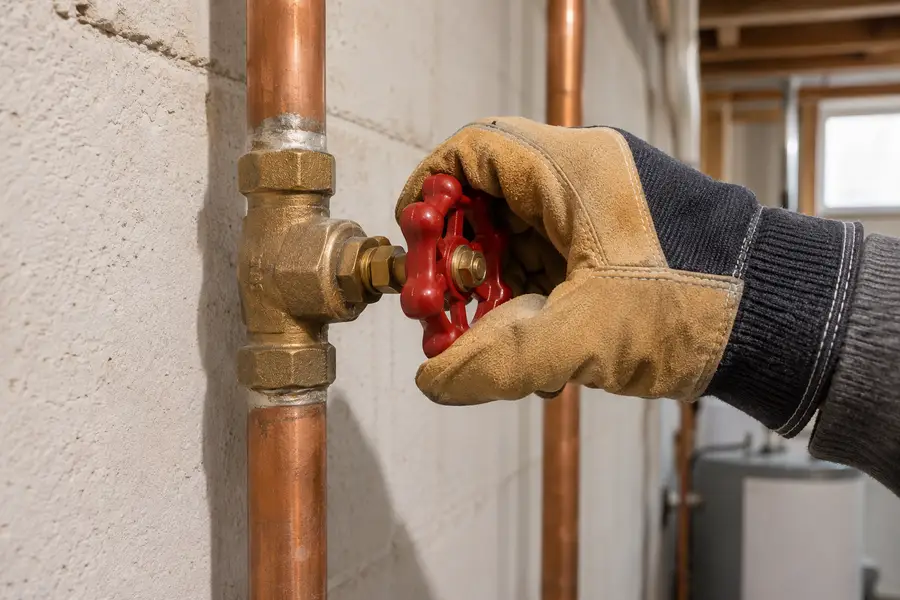
Most sinks have two small valves underneath, one for hot and one for cold. Closing them stops a leak at that fixture while the rest of the house keeps its water.
Open the cabinet
Clear the space under the sink so you can reach the back.
Find the two valves
They sit on the pipes coming out of the wall or the floor.
Turn them clockwise
Turn each handle until it stops. Do not force a valve that will not move.
Open the faucet
Release the pressure left in the lines and confirm the water has stopped.
If a valve will not turn or keeps leaking around the stem, close the main valve instead and call us.
Kitchen sinks, bathroom sinks and tub spouts
Kitchen faucets work hard, with a sprayer, a pull out hose and a single handle that moves dozens of times a day. Cartridges and hoses are the parts that wear out first.
Bathroom faucets see less use but more mineral scale from standing water, so aerators and cartridges clog and stiffen. Tub spouts and shower valves have their own cartridges, and a drip from the tub spout often means the valve behind the wall needs attention.
- Kitchen faucets wear at the cartridge, the hose and the sprayer
- Bathroom faucets suffer most from scale in the aerator
- Tub spout drips usually come from the shower valve cartridge
Faucet and sink questions
- Why does the faucet still drip once it is closed?
A worn cartridge, washer or valve seat lets water slip past even when the handle is fully closed.
A new part in that one spot usually ends the drip, and the rest of the faucet stays.
- Why is the water pressure weak at only one faucet?
The aerator at the end of the spout is often clogged with grit or scale. Unscrewing it and rinsing out the screen fixes many cases of weak flow. If the flow stays weak, the cartridge itself may be clogged.
- Is a wet cabinet under the sink serious?
It can be. A slow leak soaks the cabinet floor and can reach the subfloor before anyone notices.
Check the supply lines, the shutoff valves and the drain trap, and call if you cannot find the source or the water keeps coming back.
- Can I fix a dripping faucet myself?
If you are comfortable closing the shutoffs and taking the handle apart, many cartridge and washer repairs are simple. Bring the old part to the store to match the replacement, since faucets use many different designs.
- Why does my kitchen sprayer leak?
The hose under the sink can wear through where it bends, or the diverter valve inside the faucet can stick. Both are common repairs, and a leaking hose often shows up as water in the back of the cabinet.
- How often should supply lines be replaced?
Many plumbers suggest checking them every few years and replacing rubber lines with braided ones. Any bulge, crack or rust at the ends is a reason to replace them right away, before they burst.
- Why does my faucet make a squealing sound?
A squeal when the handle turns usually comes from worn parts inside the valve rubbing together. Replacing the washer or cartridge quiets it and often stops a drip at the same time.
- What should I do if water sprays from under the sink?
Turn off both small valves in the cabinet right away. If they do not stop the water, close the main shutoff and call us. Our guide to the first hour after a leak covers the next steps.
- Why does my faucet spit air and water?
Air in the line after the water has been off, or a loose aerator, can make a faucet sputter. Running it for a minute usually clears the air. If it keeps happening, a leak in the supply may be pulling air into the pipe.
- Can a plumber install a faucet I already bought?
Yes. Mention the faucet when you call, and the plumber checks that it fits the sink and the supply lines before fitting it.
- Why does my bathroom faucet run hot when set to cold?
A cartridge installed the wrong way round or worn inside can mix the supply incorrectly. Reseating or replacing the cartridge usually fixes it.
Fixtures and leaks worth checking too
Tap dripping or cabinet wet? Call us.
A licensed Twin Falls plumber can find the leak and repair the faucet or the lines.
Find the source
Spout, base, lines or drain.
Repair the part
Cartridges, washers and seals.
Leave it dry
Every connection checked.