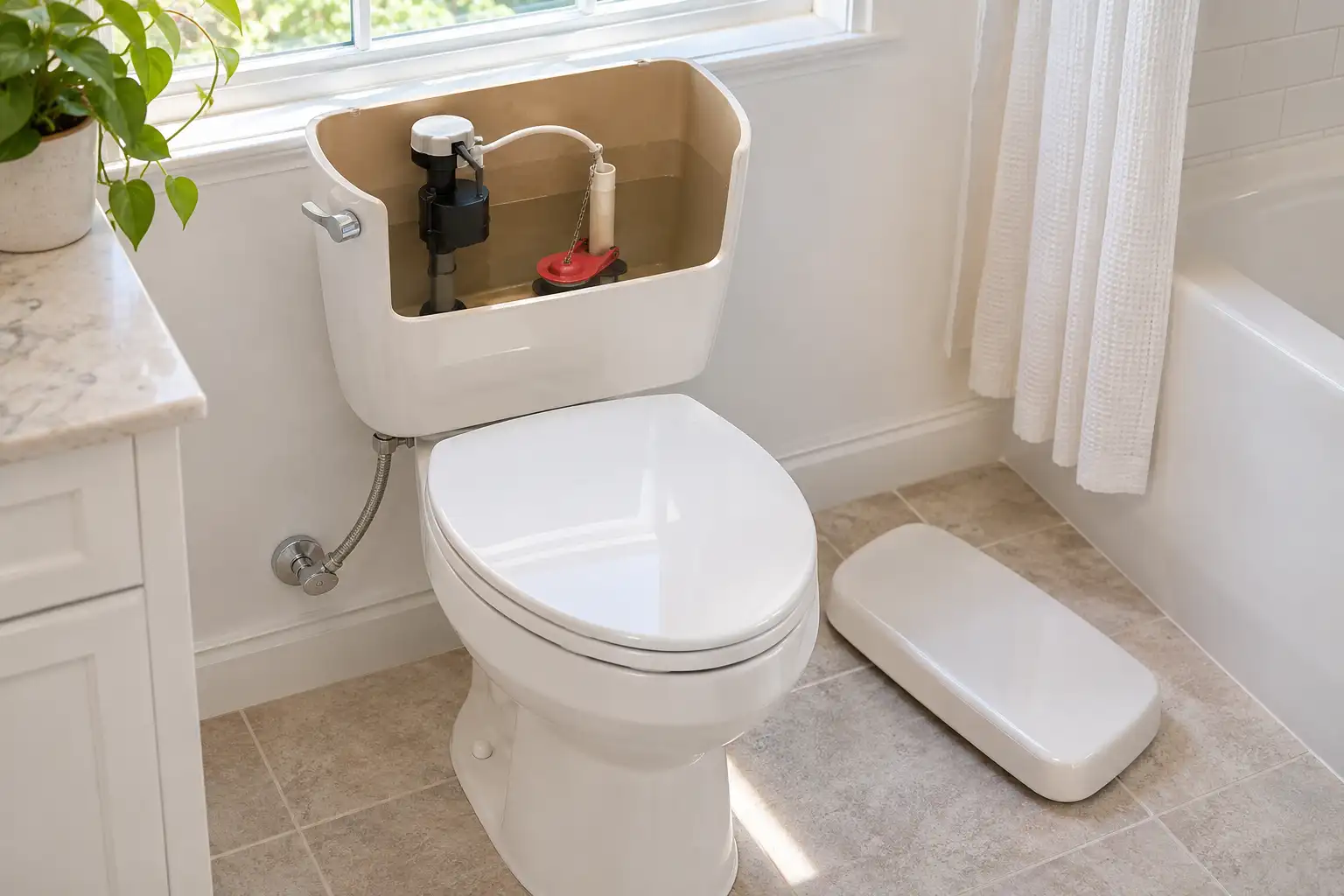
Toilet Repair in Twin Falls, ID
If a toilet hisses through the night, wobbles under you or leaves a puddle, call us and a plumber can fix the worn part.
Common toilet problems and the part behind each
Toilet repair in Twin Falls usually comes down to a handful of parts. The symptom points to which one has worn out.

A toilet that will not stop running
A running toilet sends water down the drain all day and all night. The cause is usually a flapper that has warped or a fill valve that lets water spill into the overflow tube.
Our guide to a toilet that keeps running shows how to check both parts yourself.
Why a rocking toilet needs attention
A toilet that rocks is more than an annoyance. Each movement strains the wax seal underneath, and a broken seal lets water and sewer gas escape onto the subfloor.
The plumber checks the flange, the bolts and the floor itself. A toilet reset on a new seal and properly tightened stays firm and dry.
If you see water at the base or the floor feels soft around the toilet, avoid using it until it has been checked.
When the bowl is rising toward the rim
Close the supply valve
Close the little valve at the wall to stop more water coming in.
Lift the flapper
If the bowl is still rising, push the flapper closed inside the tank.
Hold off on flushing
A second flush adds water to a bowl that cannot drain.
Try a plunger gently
A flange plunger works best. Stop if the clog will not move.
What a toilet repair covers
Toilet repair in Twin Falls usually involves one of these four jobs.
Flappers and fill valves
Replacing the parts that control the tank and the refill.
Wax seals
Pulling the toilet and setting it on a new seal.
Bolts and flanges
Securing a toilet that rocks or sits unevenly.
Stubborn clogs
Clearing blockages in the bowl and the drain below.
A clogged toilet or a blocked drain line
A single clogged toilet is a common nuisance. A toilet that backs up while other drains misbehave points somewhere deeper.
Probably the drain line
- The tub or shower rises when the toilet is flushed
- Several toilets in the house clog at the same time
- Gurgling sounds come from drains nearby
- A plunger clears the bowl but the clog keeps returning
Probably just the toilet
- Only one toilet is affected
- Other sinks and tubs drain normally
- Too much paper or something dropped caused it
- A flange plunger clears it in a few tries
What happens at a toilet repair visit
The plumber starts by watching a full flush and refill, which shows whether the flapper seals, where the water level sits and how quickly the tank refills.
Next comes a look around the base and the supply line for moisture, and a check of the bolts for movement. If the toilet needs to come up, the old seal is scraped away and the flange is inspected before the toilet goes back down on a new seal.
Before leaving, the plumber flushes several times and checks the floor again, so you know the repair holds.
Toilet questions
- What makes a toilet run nonstop?
Usually the flapper is no longer sealing, or the fill valve is set so high that water spills into the overflow tube.
Both parts are common and quick to replace, and our guide to a toilet that keeps running shows how to check them.
- Is a toilet leaking at the base dangerous?
It can damage the subfloor and let sewer gas into the room. Stop using the toilet and have the seal checked. A floor that feels soft around the toilet is a sign the water has been there for a while.
- Why does my toilet clog so often?
Frequent clogs often mean a partial blockage further down the drain, or a toilet with a weak flush from mineral buildup in the rim holes.
Older low flow toilets can also struggle, and the plumber can tell you whether a part or the toilet itself is the problem.
- Is a new flapper a job I can do?
Most homeowners can manage it. Shut off the water, flush so the tank drains, then swap the flapper for one that matches the size of the flush valve. Take the old one to the store so the new one fits.
- Why does the toilet refill every few minutes?
A worn flapper is letting the tank seep into the bowl. Put some food coloring in the tank, and if color reaches the bowl within fifteen minutes, the flapper is the culprit.
- How do I stop a toilet from rocking?
Tightening the floor bolts can help briefly, but if the flange or the seal is damaged the toilet needs to be reset properly. Shims under the base can steady a toilet on an uneven floor once the seal is sound.
- What should I do if the toilet overflows?
Close the supply valve behind the toilet, push the flapper down inside the tank and do not flush again. Mop up the water and use a flange plunger gently. If the bowl will not drain, call us.
- Could a toilet be leaking even with a dry floor?
Yes. A tank that leaks into the bowl wastes water without a drop on the floor, and a failing seal can leak into the subfloor before anything shows on top.
- Why does my toilet tank sweat?
Cold water filling the tank on a humid day makes the outside of the tank collect condensation. It drips onto the floor and can look like a leak. A tank liner or a mixing valve can stop it.
- How do I know if the wax seal has failed?
Water around the base, a sewer smell in the bathroom or a toilet that rocks are the common signs. A mark on the ceiling under the bathroom is another clue that the seal needs replacing.
- Is it worth repairing an old toilet?
Usually, yes, when the bowl and tank are sound. Flappers, fill valves and seals are replaceable parts. A cracked tank or bowl is the main reason to replace the whole toilet.
- What is a flange plunger and why does it help?
A flange plunger has an extra rubber sleeve that fits into the toilet drain opening, giving a better seal than a flat cup plunger. It clears most toilet clogs with a few firm, steady strokes.
Repairs that often come with toilet trouble
Toilet running or leaking? Call us.
A licensed Twin Falls plumber can find the worn part and fix it properly.
Find the part
Flapper, fill valve, seal or bolts.
Fix it right
Replaced and adjusted, not patched.
Check the floor
No hidden water left behind.