How to Winterize Outdoor Faucets
An outdoor faucet is the pipe most likely to freeze, so a few minutes of preparation in the fall can save a wall from flooding in January.
Why outdoor faucets freeze first
An outdoor faucet sits at the end of a pipe that passes straight through the outside wall, with only a few inches of wall between it and the freezing air. Knowing how to winterize outdoor faucets is the simplest way to prevent one of the most common winter leaks.
- The coldest spot in the systemThe pipe ends right at the outside wall.
- Water trapped behind itA hose or a closed spout holds water where it freezes.
- A split inside the wallThe damage often stays hidden until the thaw.
How to winterize outdoor faucets in five steps
Do this in the fall, before the first night below freezing.
Disconnect the hose
A connected hose keeps water sitting in the spout, where it can freeze even on a frost free spigot.
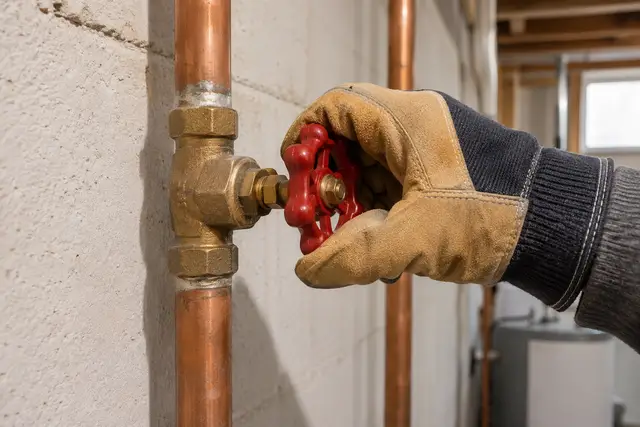
Find the inside valve
Many outdoor faucets have a shutoff valve on the same pipe inside the house, often in the basement or crawl space.
Close the valve
Turn it clockwise until it stops so no more water reaches the outdoor faucet.
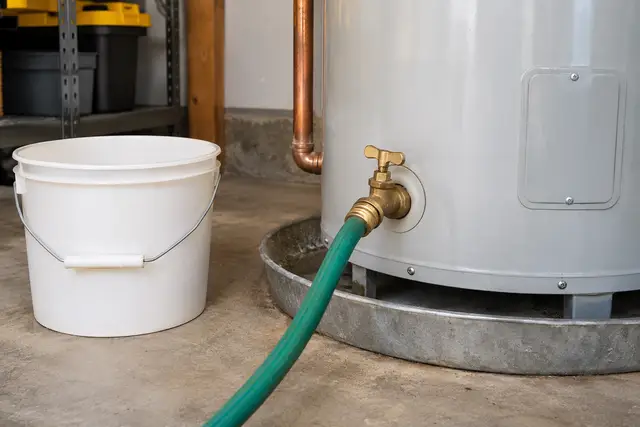
Drain the spigot
Open the outdoor faucet and let the water in the pipe run out. Leave it open for the winter.
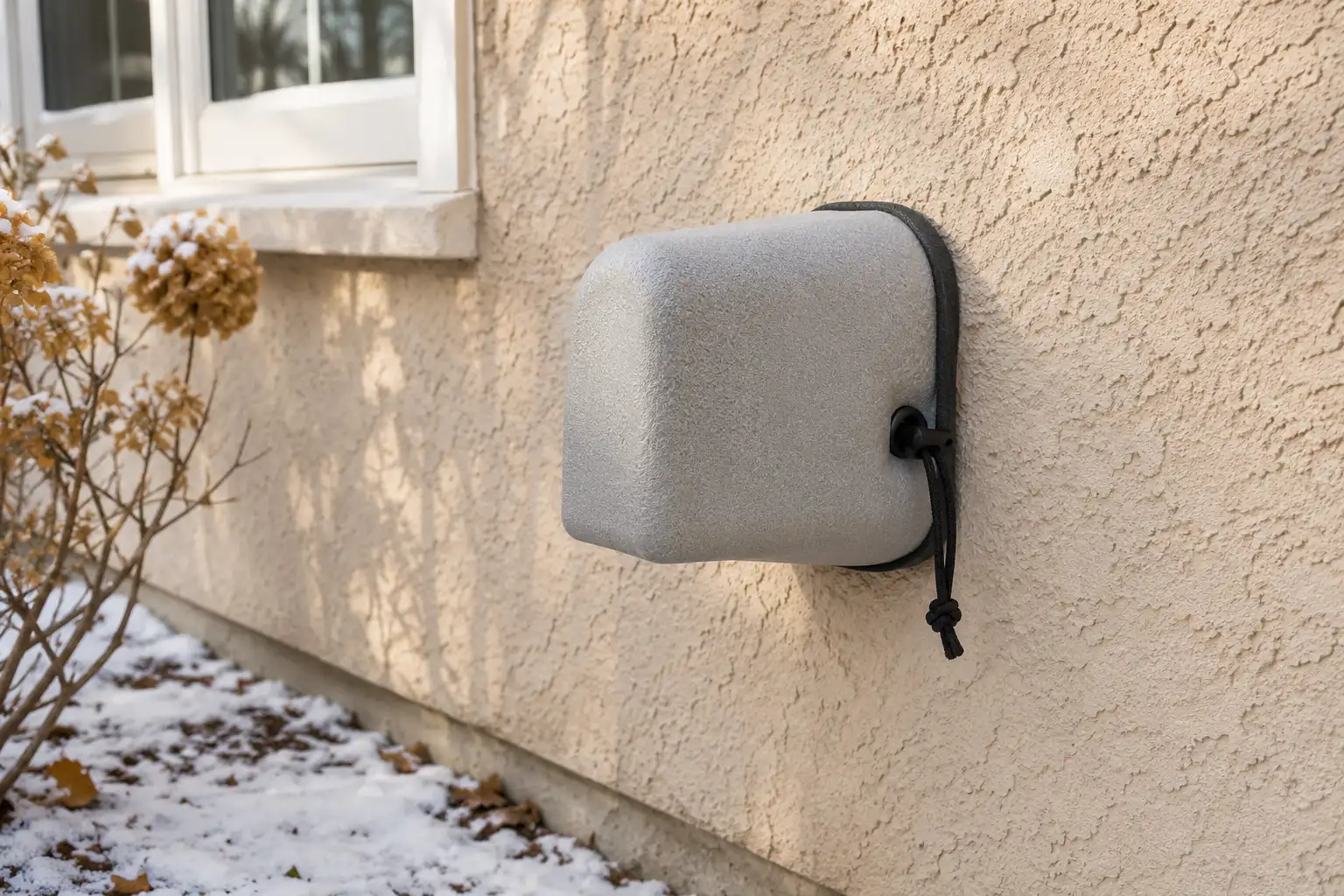
Fit a cover
An insulated foam cover over the faucet adds protection on the coldest nights.
Standard spigots and frost free spigots
A standard outdoor faucet holds water right at the wall, so it needs an inside shutoff and draining every fall. A frost free spigot has a long stem that closes the valve deep inside the warm part of the wall.
Even a frost free spigot can freeze if a hose stays attached, because the water cannot drain out of the stem. Removing the hose is the one step that matters for every type.
- A standard spigot needs an inside shutoff and draining
- A frost free spigot needs the hose removed
- Both benefit from an insulated cover in a hard freeze
Signs an outdoor faucet has already frozen
- No water when you open it
- Ice may be blocking the spigot or the pipe just inside the wall.
- Water inside after a thaw
- A damp basement wall or a wet ceiling below the faucet can mean the pipe split.
- A dripping spigot in winter
- A cracked valve can leak slowly even while it is closed.
- Ice on the wall outside
- Water seeping through the wall around the faucet freezes on the siding.
If you suspect a split, close the inside valve and see our frozen pipe repair page, or call us.
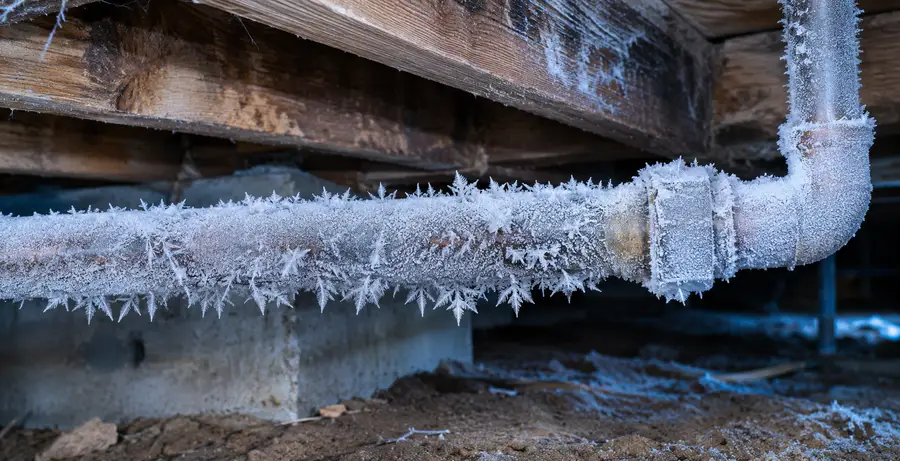
Other spots to check before winter
Outdoor faucets are not the only weak points. These are worth a look on the same afternoon.
Crawl space vents
Close vents or cover them once nights drop below freezing.
Garage pipes
Insulate lines that run through an unheated garage.
Sprinkler lines
Drain and shut off the irrigation system before the ground freezes.
Pipes on outside walls
Open cabinet doors on cold nights so warm air reaches them.
Turning the faucet back on in spring
Once the risk of a hard freeze has passed, close the outdoor faucet, open the inside valve slowly and then open the faucet again to check the flow.
Watch the wall inside for drips for a few minutes. If water appears, the pipe may have split over the winter, and a burst pipe repair is needed before you use the hose.
If you spot water inside the house after a freeze, our guide to the first hour after a leak lists what to do next.
What you need for the job
Winterizing an outdoor faucet takes a few common items and about fifteen minutes per spigot.
Mistakes that let spigots freeze anyway
Most frozen outdoor faucets come from one small oversight.
The hose left attached through the first cold snap is the classic one. Others include closing the inside valve but forgetting to open the spigot, which leaves water trapped between the two, and covering a faucet that was never drained.
Sprinkler and irrigation lines cause trouble too, because their valves often sit close to the house and freeze if the system is not drained in the fall.
-
Hose still attached
Water trapped in the hose backs up into the spigot.
-
Spigot left closed
Water caught between the valve and the spigot freezes.
-
Cover without draining
A cover cannot save a pipe that is still full.
Sprinkler lines and other outdoor water
Sprinkler and irrigation systems hold water in pipes buried just below the lawn, and in valves and backflow devices that often sit right beside the house. Water left in them through a hard freeze can crack valves and fittings.
Close the irrigation shutoff, open the drain points the system has and let the lines empty in the fall. Systems with long runs are often cleared with compressed air, a job many homeowners leave to an irrigation company.
Outdoor showers, pool fill lines and garden taps on posts need the same attention as a wall faucet. Any pipe that runs above ground outside the heated house can freeze.
Signs your winter preparation worked
A few checks during the first cold weeks confirm the outdoor faucets are safe for the season.
No drips inside
The wall behind each outdoor faucet stays dry after a hard freeze.
No ice on the siding
There is no ice forming on the wall around the spigot.
Inside valves stay closed
Nobody has opened the inside shutoff by mistake.
Covers stay snug
Wind has not loosened the covers on the coldest nights.
Spigot questions before the first freeze
- When should I winterize outdoor faucets?
Before the first night that drops below freezing. In practice that means sometime in the fall, as soon as you stop using the garden hose.
If an early cold snap arrives before you are ready, at least disconnect the hose that evening.
- Do I need to winterize a frost free spigot?
A frost free spigot still needs a little care. Remove the hose so the long stem can drain.
A cover adds extra protection on the coldest nights, and fitting one takes only a minute.
- What if I cannot find the inside shutoff valve?
Follow the pipe from the faucet back into the house, through the basement ceiling or the crawl space.
If there is no separate valve, a plumber can add one so the faucet can be shut off and drained each winter.
- Should I leave the outdoor faucet open all winter?
Yes, after you close the inside valve. Leaving it open lets any remaining water drain and gives melting ice room to expand without cracking the valve.
- Are faucet covers enough on their own?
A cover helps, but it cannot stop a pipe from freezing if water is trapped inside. Draining the spigot is still the important step, and the cover is the extra layer on top.
- Can a frozen outdoor faucet damage the house?
Yes. The pipe can split inside the wall and leak into the basement, a crawl space or a finished room once it thaws.
Our leak detection page covers how hidden leaks are found, and the water line repair page covers the buried line feeding the house.
- How do I know if my spigot split over the winter?
Turn the water back on slowly in spring and watch the wall inside for a few minutes. Water on the inside, or a spray from behind the faucet, means the pipe split and needs repair before you use the hose.
- Do I need to winterize faucets if my house is heated?
Yes. Heat inside the house does not reach the short section of pipe passing through the outside wall to the spigot, which is exactly where the freeze happens.
- Can I add an inside shutoff for my outdoor faucet?
Yes. A plumber can fit a shutoff valve on the pipe inside the house so the faucet can be isolated and drained each fall.
It is a small job that makes winter preparation much easier every year.
- Will a frost free spigot ever need replacing?
Yes. The washer at the end of the long stem can wear out, and a spigot that froze with a hose attached may have a cracked stem inside the wall. A drip from the spout or a leak inside is the sign.
- Do I need to winterize faucets on a house I am leaving empty?
Yes, and an empty house needs even more care, since it is at higher risk in winter. Drain the outdoor faucets, keep the heat on at a safe setting and consider closing the main valve.
Ask someone to check the house during long absences.